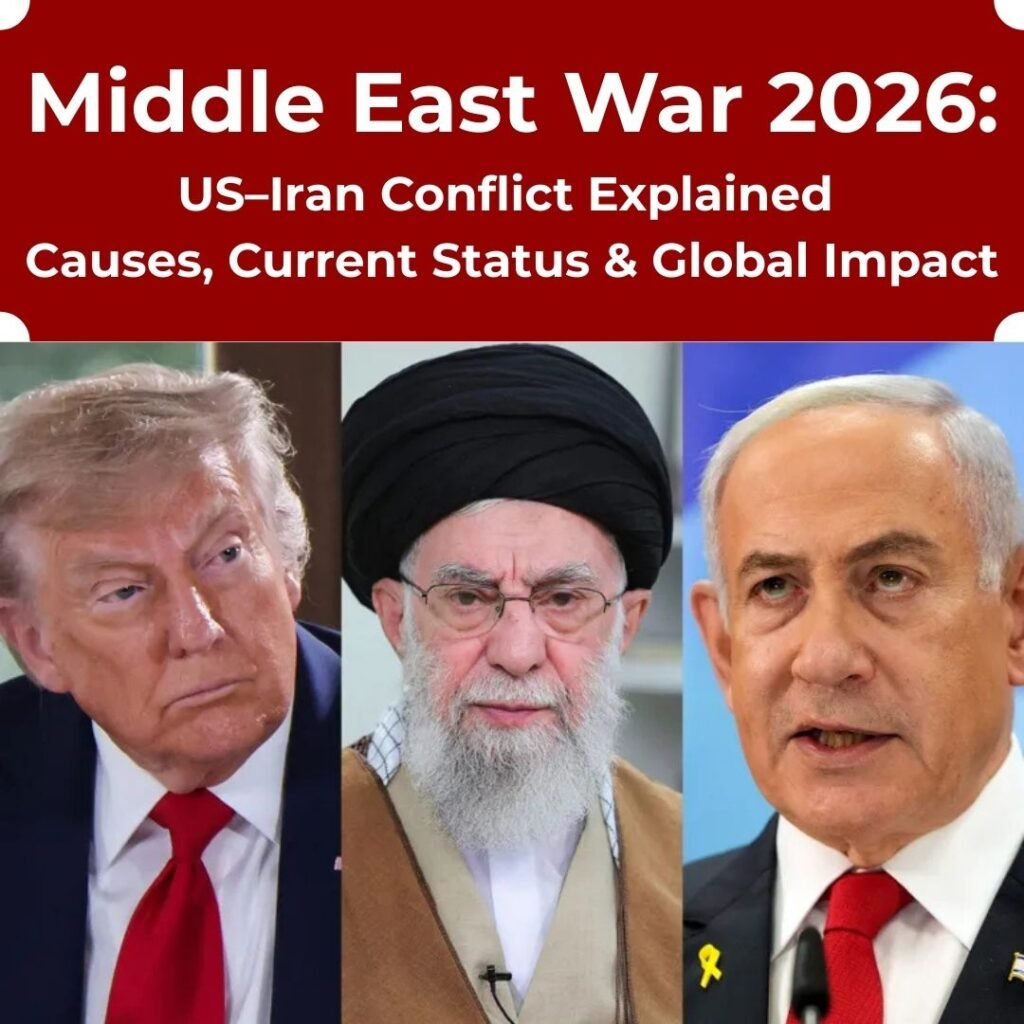
Middle East War 2026: US–Iran Conflict Explained — Causes, Current Status & Global Impact
Table of Contents
Overview: Middle East Conflict – US, Israel & Iran
An intense geopolitical conflict has erupted in the Middle East involving the United States, Israel and Iran, marking one of the most volatile episodes in the region since the early 21st century. The confrontation has escalated into wide-ranging air strikes, missile attacks, and major strategic shifts across borders
What Triggered the 2026 War
In late February 2026, a coordinated military operation by the United States and Israel, codenamed Operation Lion’s Roar, targeted multiple Iranian military and strategic facilities. These strikes included deep strikes into Tehran and other cities and resulted in large-scale casualties among Iranian military personnel.
Most critically, these operations reportedly led to the death of Iran’s Supreme Leader Ayatollah Ali Khamenei, a figure of immense political and religious importance for the Islamic Republic. In response, Iran launched major missile barrages and drone attacks targeting Israeli territory and U.S. military bases in Gulf states, dramatically broadening the conflict
Major Escalation Events
Since the initial strikes, several key developments have taken place:
Retaliatory strikes by Iran on Israeli cities and U.S. bases in the Persian Gulf region.
Casualties among U.S. military personnel confirmed in the conflict zone — the first such losses since the outbreak.
Missile attacks linked to Iranian forces were reported targeting naval vessels including the USS Abraham Lincoln.
Reports of heightened military action across other Gulf states and allied nations.
Regional Implications
The conflict isn’t contained to Iran, Israel and the U.S. alone — other countries in the region have been drawn in:
Gulf states such as Saudi Arabia, UAE and Qatar have condemned attacks on their territories and summoned Iranian envoys.
Proxy groups like Hezbollah in Lebanon have launched assaults on Israeli territory in coordination with Iranian strategies.
The risk of involvement by other Middle Eastern powers continues to hover as diplomatic tensions rise.
Impact on Global Oil and Trade
One of the immediate economic effects of the conflict has been seen in the global energy markets. As tensions in the Strait of Hormuz — a critical chokepoint for more than 20% of the world’s daily oil trade — have escalated, oil prices jumped sharply. In early March 2026, crude prices climbed by around 8–13%, reflecting concerns about supply disruptions.
A sustained choke on shipping traffic through the strait could significantly affect global oil supply flows, pressuring prices even higher and impacting economies worldwide.
Geopolitical Stakes
The U.S.–Iran conflict is not a standalone military dispute — it represents a broader confrontation involving:
Long-standing tension over Iran’s nuclear program.
Regional power balances between Iran, Israel and Arab states.
U.S. strategic interests in Middle Eastern stability.
These underlying factors have fueled a proxy landscape where multiple militias, state actors and allied forces play parts in ongoing hostilities.
How the World Is Responding
The global reaction has been a mix of:
Calls for de-escalation by major international organizations
Diplomatic efforts to prevent further expansion
Economic strategizing to deal with energy supply fluctuations
Several countries also expressed deep concern over civilian safety and global economic effects of the conflict.
Global Markets Reaction
Beyond energy markets, financial markets worldwide have been affected as investors reassess risk:
Crude oil prices surged due to supply uncertainty.
Equity indices in oil-dependent markets have shown volatility due to geopolitical risk premiums.
Shipping and commodity insurance rates have spiked as risk of passage through conflict zones increases.
Major indexes have pricing models updated to incorporate extreme geopolitical risk data following the outbreak of this conflict.
India’s Stance
India, like many other nations, has officially advocated for resolution through diplomatic dialogue and urged all countries to prioritize peace and negotiations over military actions.
What’s Next: Possible Outcomes
While a defined conclusion is not yet clear, experts suggest:
Diplomatic negotiations may continue parallel to military actions.
Conflict could span weeks or months given the entrenched positions.
Regional alliances could shift depending on strategic concessions.
U.S. leadership has indicated the conflict might last several weeks, though officials state an end goal remains to be defined.